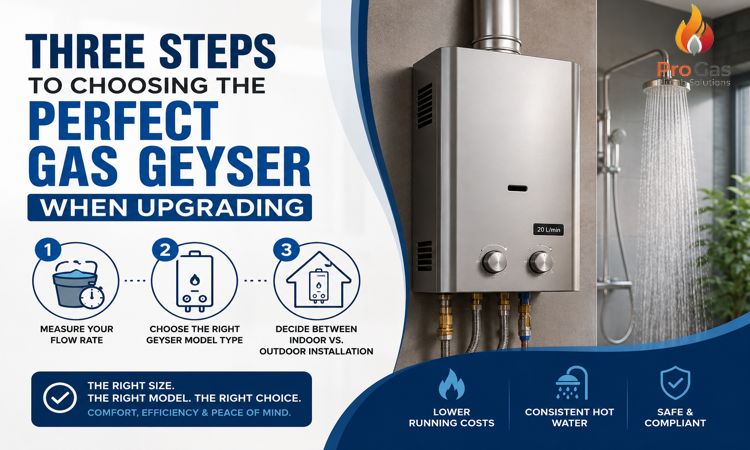
Three Steps to Choosing...
 25 May 2026


 25 Apr 2026
 Posted By admin
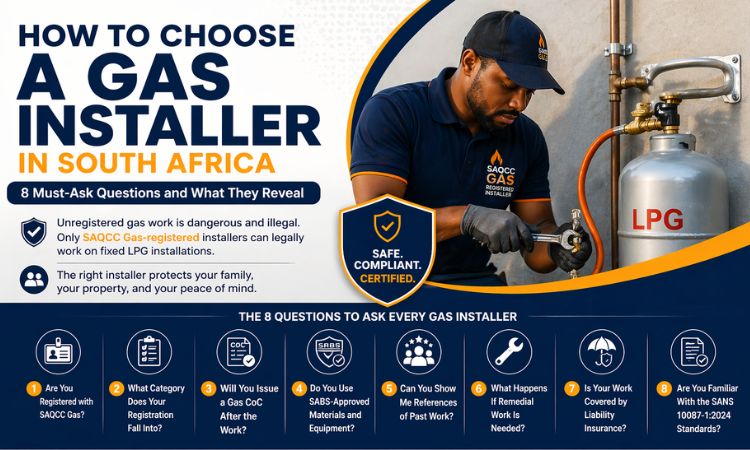
Unregistered gas work is not just dangerous but illegal in South Africa. With the national surge in gas adoption, more homeowners are hiring installers without knowing what to check first.
In South Africa, only SAQCC Gas-registered installers can legally work on fixed LPG installations. It is important to vet the installer properly since hiring the wrong instructor can void your insurance, block a property sale, or put your family at risk.
For an effective due diligence, it is important to know which questions to ask and what the right answer to them is.
When vetting your gas installer, here’s a list of questions that you should ask:
Under the Occupational Health and Safety Act (No. 85 of 1993) and the Pressure Equipment Regulations, only a person registered with the South African Qualification and Certification Committee for Gas (SAQCC Gas) may legally install, maintain, or repair an LPG system.
Every legitimate installer carries a valid digital SAQCC Gas registration card. You can verify this registration online through SAQCC’s official website. If the installer is unwilling to offer their registration, it might be because they are unregistered.
SAQCC Gas registration comes in three categories:
A domestic-only registered installer is not permitted to perform commercial work and vice versa.
When you want your gas installer to work on your gas hob, geyser, or braai, make sure that they have a registration which falls under the domestic category.
If they give a vague answer or have a registration in a different category, working on your home gas installation falls outside their scope.
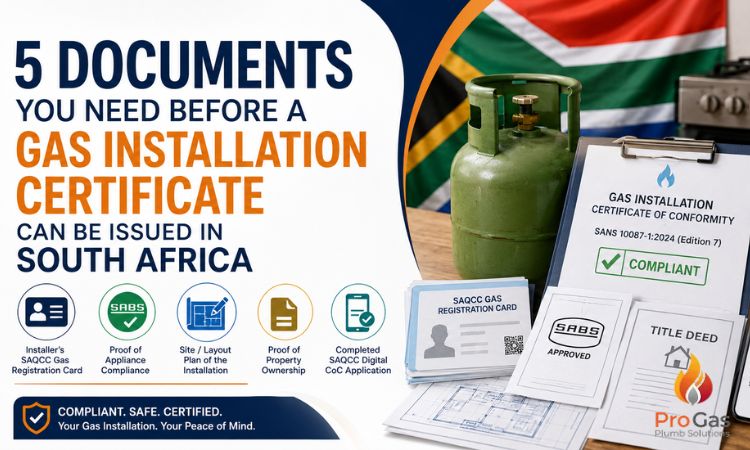
If any work is performed on an existing gas line or a fresh installation is completed, it is legally required to get a Gas CoC. This will be done by your installer on completion of the work.
If your installer is unable to issue the CoC or say they will sort it out later, take it as a red flag. Also, keep in mind that a CoC is valid only if it has been issued by a registered installer.
The SANS10087-1:2024 sets strict standards about which materials can be used in a gas installation. The most important of these standards are:
A knowledgeable installer will follow these standards without prompting. Ask what pipe material they use and whether their regulators and hoses carry LPGSA verification. If they are unfamiliar with the standards, it is possible that their work will not pass an inspection.
It is always better to opt for an experienced and reputable installer. You can look at the installer’s website and check their reviews on community portals. A reputable installer working in domestic settings will have a track record of previous clients who can confirm clean, compliant work and a smooth CoC process.
Ask for two or three recent references in your area and verify them. Prefer reliable installers over one with past complaints or vague client feedback.
No CoC can be issued if the installation is not 100% compliant. If issues like wrong pipe material, incorrect cylinder placement, and inadequate ventilation are present, remediation work will be needed before the CoC is issued.
Ask upfront if they provide a separate written quote for remediation work and who will bear the charges of a re-inspection. If they are unable to answer, it is probable that don’t have a clear process.
Registered installers who take their work seriously carry liability cover. In the unlikely event of an incident linked to their installation, the liability insurance provides recourse.
This is a must for landlords since tenants, third parties, and property damage claims can become a problem if the installer wasn’t properly insured. Plus, this also reveals if the installer is running a professional business with proper financial accountability.
The SANS 10087-1, updated in 2024, introduced updated rules around cylinder placement near electric fences, restricted zones around installations, and ventilation requirements. Thus, a clear knowledge of these standards is a must for the installer.
A competent installer will be able to reference specific requirements like
Do not work with installers who re not up to date on the standards since this can create a compliance risk.
The steps to verify if your installer is the right fit for you, the steps are fairly straightforward:
Choosing the right gas installer is critical since non-standard and non-compliant work done by an unreliable installer is a serious safety concern. Thus, vet your installer properly the next time you have to get work done on your gas lines.
Yes, but only if they hold a separate SAQCC Gas registration. General plumbing qualifications do not cover gas work. Always confirm their gas-specific registration before you hire them.