
Three Steps to Choosing...
 25 May 2026


 20 Apr 2026
 Posted By admin
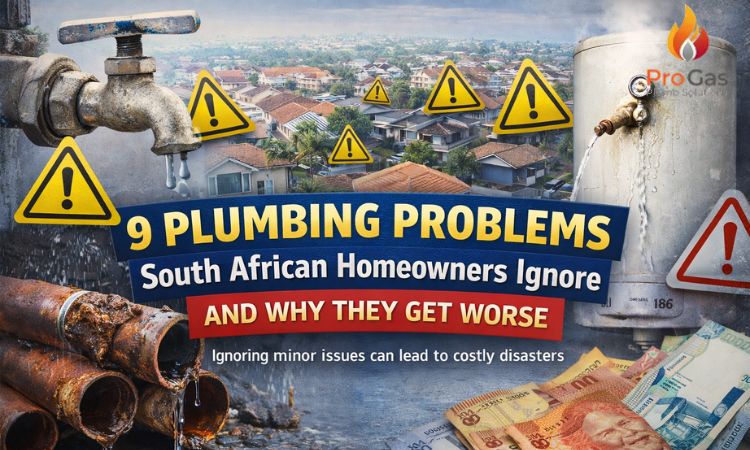
South African households face ignored plumbing issues amid 47% national non-revenue water losses. Dripping taps, clogs, and geyser faults top the list. However, homeowners shrug these off as minor inconveniences.
The plumbing pressures which lead to these issues include ageing infrastructure, fluctuating municipal water pressure, hard water in many regions, and frequent load shedding that stresses geyser systems. These factors mean small plumbing faults don’t stay small for long.
Here, we cover the 9 most commonly ignored plumbing issues, why each one escalates, and what the fix can cost you if left unattended.
A single dripping tap can waste thousands of litres of water per month. This figure comes from an Africa-centric study which classifies it as one of the worst offenders of unnecessary household water loss.
Usually, a worn washer causes the drip, which can be fixed with a quick replacement. Left unattended, this can cost you a lot more for a complete tap replacement.
Hair, grease, and soap scum build up in layers inside your drain, slowing down the drainage. Most homeowners wait until the drain is fully blocked.
A partial blockage causes pressure build-up. Over time, pipe joints get weaker and tree roots grow into the cracks. What could have been a simple drain clean becomes a pipe repair or excavation.
Flush your toilet, and then wait five minutes. If water is still trickling into the bowl, you have a silent leak.
A faulty flapper or float wastes water constantly and municipalities charge for every litre consumed. With Cape Town and eThekwini both seeing steep municipal water tariff increases, an undetected toilet leak adds hundreds of rands to your monthly bill.
Many South African homeowners blame the local municipality when their shower pressure drops. While it is true in some cases; it is not always the case. Low pressure inside a home can signal
Ageing infrastructure and fluctuating municipal pressure are real challenges across South Africa, but if the problem is internal pipe corrosion, it will only get worse. Eventually, corroded pipes can crack or burst.
Geyser problems can come across as
Ignoring these could turn into an expensive mistake.
A burst or leaking geyser can cause tens of thousands of rands in water damage to your ceiling, electrics, and structure. Plus a standard electric geyser replacement costs much less than paying emergency fee on top of replacement.
Get your geyser serviced with a thermostat check, element test, and valve inspection.
A soft, discoloured, or slightly damp ceiling patch near a bathroom or geyser should not be waved off as an old stain or the paint bubbling. A slow leak inside the ceiling, from a pipe joint, shower tray overflow, or geyser drip, saturates the board for months before it’s visible.
By the time it becomes obvious, you’re often looking at ceiling replacement, pipe repairs, and potential mould remediation. Remember, a plumber’s leak detection visit will always cost less than repairing structural damage.
High municipal water pressure sounds more like a blessing than a problem. It isn’t. In fact, South African homes, across municipal areas, are regularly exposed to high and fluctuating water pressure, which accelerates wear on every pipe, joint, fitting, and appliance in the home.
Let unchecked, it shortens the lifespan of taps, washing machines, geysers, and toilet cisterns. It also dramatically increases the risk of a burst pipe. This makes a pressure regulator a smart investment.
Hard water is common across South Africa. Over time, it deposits calcium and magnesium inside pipes and fixtures. This is more visible on taps and showerheads and less visible inside your geyser tank and supply lines.
Lime scale reduces water flow, decreases appliance efficiency, and ultimately damages your entire plumbing system. Inside a geyser, it builds up on the heating element, raising your electricity bill and shortening the unit’s life. Electric geysers already account for up to 50% of monthly household electricity consumption and lime scale makes that worse.
You can go for an annual geyser flush and descaling or install an inline filter or softener (which is a one-time cost).
A leaking outdoor tap or cracked irrigation line are easy to forget bout but they affect your water bill. Garden-side leaks can erode soil and undermine pathways. If the pipe runs close to the home’s foundation, it can also cause long-term structural damage.
Resolve this with a hose bib replacement or a small repair to save on foundation repair costs in the future.
South African homes are under plumbing stress due to hard water, ageing pipes, and fluctuating municipal pressure. Bearing small, manageable plumbing repair costs is always a better option than emergency repairs that cost thousands of rands.
As a smart homeowner, take the book an annual home plumbing inspection before an emergency strikes.
Put a few drops of food colouring into the cistern and don’t flush for 15 minutes. If colour appears in the bowl without flushing, you have a leak. Get a plumber to replace the float/flapper valve.